Industry Trends Driving Demand for Rugged Pressure Transducers
In modern industrial automation, unplanned downtime remains the single largest cost driver, often exceeding $100,000 per hour in high-stakes sectors like power generation and petrochemical processing. The push for predictive maintenance and continuous monitoring has intensified the need for sensors that can survive extreme conditions without frequent recalibration or replacement. Crystal element transducers, with their inherent stability and wide operating range, are increasingly specified for these applications because they minimize lifecycle costs by reducing sensor drift and failure rates.
For gas turbines and nuclear reactors, the cost of a sensor failure is not just the part replacement but the entire system shutdown, inspection, and restart sequence. This market reality makes the Vibro Meter 143-103-000-931 particularly relevant, as its design targets exactly these high-cost failure scenarios.
Introducing the 143-103-000-931: A Cost-Focused Overview
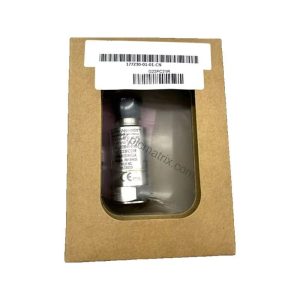
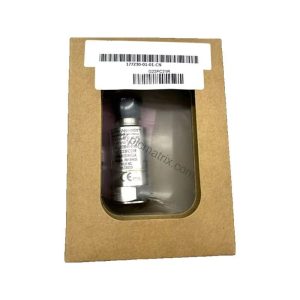
When a pressure transducer fails in a gas turbine or nuclear primary circuit, the resulting downtime can cost millions. The Vibro Meter 143-103-000-931 piezoelectric pressure transducer addresses this risk head-on with a VC2 type crystal element engineered for extreme reliability. Rated for continuous operation from −54 to +650°C and extreme operation from −196 to +700°C, this sensor eliminates the need for cooling systems or thermal barriers that add capital and maintenance expense.
Its high-pressure capability up to 250 bar means it can handle both normal operation and overpressure spikes without damage, directly reducing the risk of catastrophic failure. By using a single crystal material in compression mode, the design minimizes sensitivity to acceleration, ensuring accurate readings even in high-vibration environments where cheaper sensors would produce false alarms or drift.
Technical Specifications and Cost Implications
The 143-103-000-931 delivers a sensitivity of 232 pC/bar at 2 Hz with ±5% typical accuracy, which translates to precise pressure measurement without the need for frequent field calibration. This stability reduces labor costs for maintenance teams and extends calibration intervals, a direct saving in total cost of ownership. The dynamic measuring range of 0.00004 to 20 bar nominal covers both low-level fluctuations and full-scale events, enabling a single sensor to replace multiple units in some installations.
Frequency response from 2 to 10000 Hz ±5% ensures the transducer captures both slow process changes and rapid transient events, critical for condition monitoring systems that detect early signs of blade or bearing wear. The resonant frequency greater than 50 kHz means the sensor can survive high-frequency vibrations without resonance-induced damage, further reducing replacement costs. Internal insulation resistance of minimum 109 Ω at room temperature and 107 Ω at 300°C guarantees signal integrity over long cable runs, eliminating the need for expensive signal conditioning hardware.
Application Scenarios Where Cost Savings Are Realized
In gas turbine combustion monitoring, the 143-103-000-931 measures dynamic pressure fluctuations that indicate flame stability and combustion efficiency. By providing accurate, drift-free data over thousands of operating hours, it enables operators to optimize fuel-air ratios, reducing fuel costs by 1-3% while extending turbine blade life. The extreme temperature capability up to +700°C allows direct mounting near the combustion zone without cooling adapters, saving both hardware and installation labor.
For nuclear power plants, the transducer's qualification to NRC guide 1.20 and IEEE 323-1974 means it meets stringent safety standards for primary circuit monitoring in PWR, APWR, BWR, ABWR, FBR, and HTGR reactors. Its radiation tolerance—gamma flux up to 1011 erg/g and neutron flux up to 1018 n/cm2 with no effect—eliminates the need for periodic sensor replacement due to radiation damage, a major cost driver in nuclear facilities. The hermetically welded INCONEL alloy 600 construction resists corrosion and humidity, further extending service life in harsh containment environments.

Real-World Application Example: Reducing Downtime in a Combined Cycle Plant
Consider a combined cycle gas turbine plant that experiences unplanned outages twice per year due to pressure sensor failure in the exhaust section. Each outage costs $150,000 in lost generation and repair labor. By replacing conventional sensors with the 143-103-000-931, which offers continuous operation up to +650°C and overload capacity up to 250 bar, the plant can eliminate these failures entirely. The transducer's acceleration sensitivity of ≤0.05 pC/g ensures vibration-induced errors do not trigger false trips, avoiding unnecessary shutdowns that cost thousands per hour.
Frequently Asked Questions About the 143-103-000-931
How does the 143-103-000-931 reduce total cost of ownership compared to standard pressure transducers?
The transducer's extreme temperature range (−196 to +700°C) and high-pressure capability (up to 250 bar) eliminate the need for cooling systems, thermal barriers, or pressure reducers, reducing initial installation costs. Its long-term stability—no subsequent calibration necessary after factory calibration—cuts recurring maintenance labor and calibration equipment expenses. The hermetically welded INCONEL alloy 600 construction resists corrosion, extending service life and reducing replacement frequency.
Can the 143-103-000-931 be used in existing gas turbine monitoring systems without major modifications?
Yes. The transducer provides a charge output via a 2-pole system insulated from the casing, compatible with most charge converters used in industrial condition monitoring. The integral mineral insulated cable with twin conductors terminates in either a LEMO or high-temperature connector from Vibro-Meter, allowing direct connection to existing data acquisition systems. Its frequency response of 2 to 10000 Hz covers the range needed for combustion dynamics and blade pass monitoring.
What specific cost savings can a nuclear plant expect from using this transducer in primary circuit monitoring?
By eliminating sensor degradation from radiation (gamma flux up to 1011 erg/g and neutron flux up to 1018 n/cm2 with no effect), the 143-103-000-931 avoids the recurring cost of replacing sensors every refueling outage. The dynamic measuring range of 0.00004 to 20 bar nominal allows detection of small pressure anomalies that indicate developing faults, enabling predictive maintenance that prevents costly unplanned shutdowns. The linearity of ±1% over the dynamic range ensures accurate data for safety analysis, reducing the risk of regulatory penalties.
Why Choose BluePLC Industrial for Your Vibro Meter Needs
BluePLC Industrial offers genuine Vibro Meter 143-103-000-931 transducers with full traceability and factory calibration documentation. Our team provides technical support to help you select the correct cable length and connector type for your specific application, ensuring optimal performance and cost efficiency. With competitive pricing and fast global shipping, we help you minimize procurement lead times and keep your critical processes running.