Schneider 171CCS76000 Modicon Momentum Processor Adapter
Explore the Schneider Electric 171CCS76000 M1/M1E processor adapter module for Modicon Momentum. Key specs: 256…
Read More
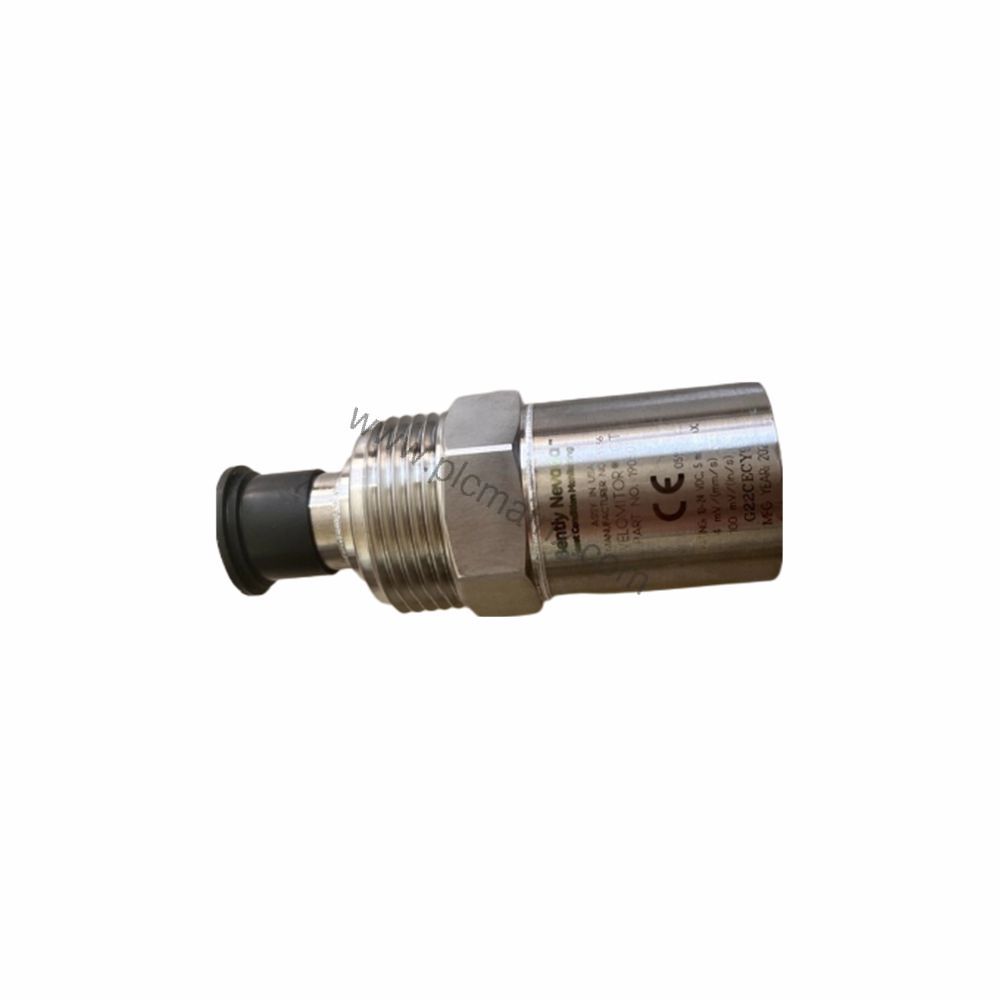
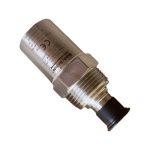
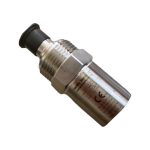
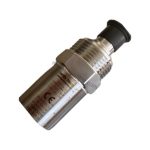
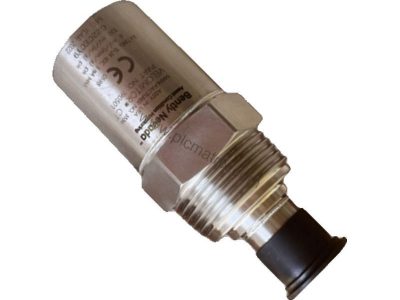
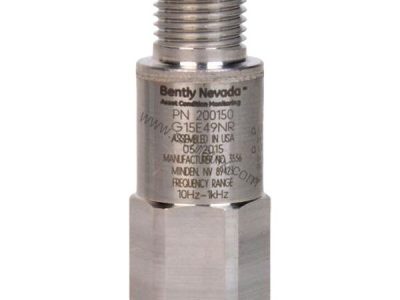
When machinery vibration threatens uptime in critical rotating equipment, the Bently Nevada 190501-11-00-CN Velomitor CT Velocity Transducer delivers precise measurement. This industrial-grade sensor, manufactured in the U.S.A., converts mechanical velocity into an electrical signal for condition monitoring systems. With a sensitivity of 3.94 mV/mm/s (100 mV/in/s) ±5%, it provides reliable data for predictive maintenance programs.
Understanding the key parameters helps you match this transducer to your application. The 190501-11-00-CN offers a frequency response of 3.0 Hz to 900 Hz (180 to 54,000 cpm) within ±1.0 dB, and extends from 1.5 Hz to 1.0 kHz (90 to 60,000 cpm) within ±3.0 dB. This range covers common machinery speeds from slow rotating drums to high-speed pumps.
The output bias voltage is 10.1 Vdc ± 1.0 Vdc, referenced from Pin A to Pin B. Dynamic output impedance is less than 400 Ω typical. Amplitude linearity holds within ±2% up to 63.5 mm/s pk (2.5 in/s pk). The mounted resonant frequency is 9 kHz minimum (stud mounted, except quick disconnect).
Environmental resilience is strong: operating temperature from -40°C to +85°C (-40°F to +185°F), storage from -40°C to +100°C (-40°F to +212°F). It withstands 5000 g pk shock and 100% condensing humidity. Magnetic field susceptibility is less than 0.0068 mm/s/gauss (0.268 mil/s/gauss) at 50 gauss, 50-60 Hz.
This velocity transducer suits a variety of rotating machinery monitoring tasks. In steam turbine trains, its frequency response captures both low-speed shaft vibrations and higher-frequency blade pass signals. For centrifugal compressors in gas processing, the stainless steel construction resists harsh environments while the 305-meter (1,000 ft.) maximum cable length allows remote mounting from the monitoring system.
Pump monitoring in water treatment plants benefits from the transducer's wide operating temperature range and 100% humidity tolerance. The internal electronics are isolated from the case, reducing ground loop issues common in industrial settings.
Mounting the 190501-11-00-CN requires attention to surface preparation. The mounting surface must be 33 mm diameter (1.3 in diameter). Use the provided plate stud (3/8-in 24 to 1/4-in 28) and tighten to 4.5 N-m ± 0.6 N-m (40 in-lbf ± 5 in-lbf). The transducer can be mounted in any orientation. Polarity is defined: Pin A goes positive with respect to Pin B when velocity is from base to top.
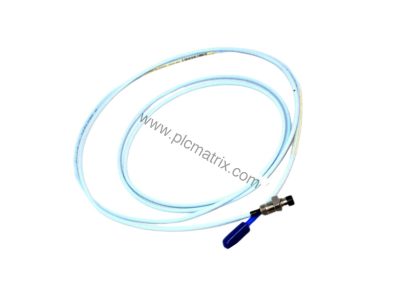
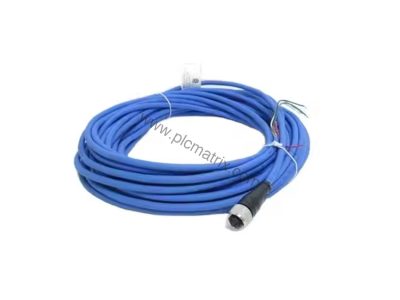
For cable runs, use part number 02173006 up to 305 metres (1,000 ft.) without signal degradation. The connection uses a MIL-C-5015 2-pin 316L stainless steel connector on top.
Routine inspection should verify the mounting torque remains within specification and the cable is free from damage. The 316L stainless steel case resists corrosion in most industrial atmospheres. The transducer's internal electronics are isolated from the case, reducing susceptibility to electrical noise. Periodic functional testing using a known vibration source can confirm sensitivity remains within ±5%.
Before purchasing the Bently Nevada 190501-11-00-CN, verify the agency approval option matches your site requirements. This unit carries the CN country-specific approval. For intrinsically safe installations, confirm the transducer's Ex ia IIC T4 or AEx ia IIC T4 ratings (for agency approval options 01 through 04) align with your area classification. Always install per drawing 167536 for hazardous locations.
Contact BluePLC Industrial to confirm current lifecycle status and availability. Our team can help you select the correct mounting hardware and connection options for your specific application.
For complete technical specifications for the 190501-11-00-CN, please contact BluePLC Industrial.
| Model | 190501-11-00-CN |
|---|---|
| Brand | Bently Nevada |
| Stock Status | In Stock |
| Warranty | One Year |
The bently-nevada-190501-11-00-cn-velomitor-ct-velocity-transducer is designed for industrial measurement applications as specified in the product description. It provides accurate and reliable readings suitable for process control and monitoring.
The bently-nevada-190501-11-00-cn-velomitor-ct-velocity-transducer provides standard industrial output signals such as 4-20mA, voltage, or digital communication protocols as specified.
The bently-nevada-190501-11-00-cn-velomitor-ct-velocity-transducer features the enclosure rating and environmental protection as specified. Many industrial sensors offer NEMA or IP ratings suitable for demanding conditions.
Calibration procedures are provided in the product manual. The bently-nevada-190501-11-00-cn-velomitor-ct-velocity-transducer may support zero and span adjustments through potentiometers or software commands.
Mounting brackets, cables, connectors, and calibration kits are available for the bently-nevada-190501-11-00-cn-velomitor-ct-velocity-transducer. Contact our sales team for accessory compatibility.
Interested in this product? Fill out the form below and we'll get back to you within 24 hours.
 In Stock
 In Stock
 In Stock
 In Stock
 In Stock
 In Stock
 In Stock
 In Stock

Explore the Schneider Electric 171CCS76000 M1/M1E processor adapter module for Modicon Momentum. Key specs: 256…
Read More
Learn how the Schneider 171CCC96020 M1/M1E processor adapter module solves Ethernet integration challenges in Modicon…
Read More
Explore the Schneider 172PNN21022 Modbus Plus adapter module for Modicon Momentum. Learn specs, applications, and…
Read More
Explore the Schneider Electric 172JNN21032 serial link adapter module for Modicon Momentum. Learn about its…
Read More
A comprehensive buyer's guide for the Allen-Bradley 1734-ADN POINT I/O DeviceNet Adapter Module, covering specifications,…
Read More
Explore the Schneider Electric 171CCC76010 M1/M1E processor adapter module for Modicon Momentum, featuring 32 MHz…
Read More
Explore the Allen-Bradley 1734-APB PROFIBUS DP Network Adapter. This buyer's guide covers specs, applications, and…
Read More
Explore the Allen-Bradley 1734-EP24DC expansion power supply from a maintenance engineer's perspective. Learn about its…
Read More